Introduction
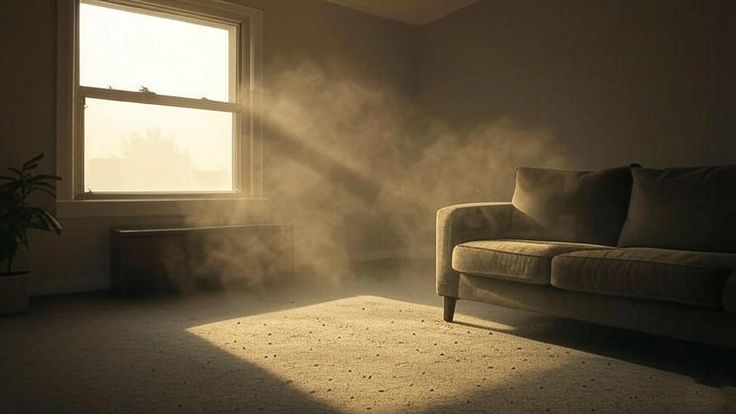
When we talk about air pollution, we picture traffic and factories. But we spend most of our day, and all of our night, indoors. What many families do not realise is that the air inside the house can sometimes be worse than the air outside.
Let me share what I commonly see in my practice, and simple changes that make a big difference.
Source 1: Mosquito Coils
In Chennai, mosquito coils are part of everyday life. Many families burn one every night in a closed bedroom. Here is the problem.
A well-known scientific study found that burning one mosquito coil releases the same amount of fine particles (PM2.5) as burning 75 to 137 cigarettes1, and as much formaldehyde as about 51 cigarettes. Formaldehyde is a chemical known to irritate the airways and cause cancer.
A study from rural Tamil Nadu also looked at mosquito coil and biomass smoke exposure and respiratory health2, and earlier research has linked coil smoke to wheezing.
Safer alternatives:
- Mosquito nets (the safest option for babies and children)
- Window and door mesh
- Electric bats
- Repellent creams applied on the skin as directed
- Removing standing water around the house
If you must use a coil, never burn it in a closed room where people are sleeping. Simply opening windows can cut the smoke levels by a lot.
Source 2: Incense Sticks (Agarbatti) and Sambrani
Lighting agarbatti and sambrani is a beautiful part of our tradition. I do not ask my patients to stop prayer. I only ask them to be sensible:
- Light one stick instead of many.
- Keep the pooja area well-ventilated.
- Do not let babies, asthma patients or elderly COPD patients sit close to the smoke.
- Avoid sambrani smoke for newborns, even though it is a common practice after a bath.
Source 3: Cooking Smoke
In rural areas, many families still cook with firewood, cow dung cakes or crop waste. This is called biomass fuel. Even in cities, frying and tempering (thalippu) produce fumes in small kitchens.
The evidence here is strong. A 2026 review of Indian studies found that COPD was far more common among biomass fuel users (8%) than LPG users (1%)3. An earlier multi-centre Indian study found that about 30% of COPD patients had never smoked, and most of them had been exposed to biomass smoke in their kitchens4.
This is why I often see elderly women with COPD who have never touched a cigarette in their life.
What helps:
- Switch to LPG or electric cooking wherever possible.
- Use a kitchen chimney or exhaust fan.
- Keep kitchen windows open while cooking.
- Keep young children out of the kitchen when frying or burning firewood.
Source 4: Tobacco Smoke at Home
Second-hand smoke is one of the worst indoor pollutants. There is no safe level. If a family member smokes, the rule should be simple: never inside the house, never in the car, and never near children.
Source 5: Damp Walls and Mould
Black patches on walls and ceilings, especially after the monsoon, are mould. Mould spores trigger asthma, allergies and sometimes serious fungal lung infections in people with weak immunity. Fix leaks, improve airflow and clean mould safely.
Source 6: Cleaning Chemicals and Room Fresheners
Strong phenyl, bleach, and spray fresheners can trigger asthma attacks. Never mix bleach with other cleaners. Use them in ventilated rooms.
A Simple Healthy-Home Checklist
- No mosquito coils in closed bedrooms
- Mosquito nets for children
- Kitchen exhaust fan or chimney
- Clean fuel (LPG or electric)
- No smoking indoors
- Windows opened daily for fresh air
- Leaks and mould fixed quickly
- Limited incense in ventilated space
Frequently Asked Questions
Q1.Are "smokeless" mosquito coils safe?
A study showed that a charcoal-based smokeless coil had up to 10 times lower particle emissions5 than regular coils. Lower is better, but it is still not zero. Nets and mesh remain the safest choice.
Q2.Are liquid mosquito vaporisers safer than coils?
They produce much less smoke than coils, so they are generally a better option. Still, use them in ventilated rooms and follow the label.
Q3.Can indoor smoke cause asthma in children?
Yes. Smoke from cooking, coils and tobacco is a known risk factor for wheezing and asthma in children.
KEY TAKEAWAY
The Bottom Line
You do not need expensive gadgets to protect your family's lungs. Small habits, like a mosquito net instead of a coil, an open kitchen window, and a smoke-free home, can protect your loved ones for a lifetime.
Sources & references
- Burning one mosquito coil releases the same amount of fine particles (PM2.5) as burning 75 to 137 cigarettes psasir.upm.edu.my/id/eprint/40056/7/liu-et-al-2003-mosquito-coil-emiss…
- Mosquito coil and biomass smoke exposure and respiratory health academic.oup.com/jpubhealth/article/44/3/625/6257749
- COPD was far more common among biomass fuel users (8%) than LPG users (1%) link.springer.com/article/10.1186/s12890-026-04134-0
- About 30% of COPD patients had never smoked, and most of them had been exposed to biomass smoke in their kitchens onlinelibrary.wiley.com/doi/abs/10.1111/resp.14269
- Charcoal-based smokeless coil had up to 10 times lower particle emissions pmc.ncbi.nlm.nih.gov/articles/PMC2859469/

ABOUT THE AUTHOR
Dr. Koushik Muthu Raja Mathivanan, M.D.
Dr. Koushik Muthu Raja Mathivanan is a Consultant Pulmonologist in Chennai.
This article is for general awareness and does not replace a consultation with your doctor.
Have a concern about your breathing?
Online articles can support awareness, but they cannot replace an individual medical assessment.